
Ask any AI leader for their roadmap and the slides arrive within minutes, usually with a slide titled "vision" and a logo cloud nobody quite remembers approving.
Ask what happens the moment an agent makes a bad call at 2 am with real credentials, and the room goes quiet in a way slides rarely manage.
That second question is the one worth rehearsing before 2027 turns it into a live incident, a board inquiry, or a missing production database.
So then, here are the ten questions worth rehearsing before someone else asks them first, ideally somewhere quieter than a board meeting...
1. Can you name every agent running in production, and whose login it uses?
As the number of AI platforms inside a company grows, so does reliance on shared human logins and static API keys for agents that should carry an identity of their own. When an agent runs under a colleague's credentials, the audit trail disappears.
Better to find out on a Tuesday than during an incident review with the word "postmortem" in the calendar invite.
2. If an agent starts misbehaving at 2 am, can anyone actually stop it?
Most organizations have invested heavily in watching what their agents do, which is a comforting habit right up until watching is all they can do. Stopping one turns out to be the rarer skill:
- Only 40% can quickly terminate a misbehaving agent, and fewer still can isolate one from the wider network once something goes wrong.
- A genuine kill switch sits outside the agent's own reasoning and outside any orchestration layer it could modify itself.
A monitoring dashboard makes a poor substitute for an off switch, in the same way a smoke detector makes a poor substitute for a fire extinguisher.
 AIAI
AIAI
3. Which of your AI vendors are agentic, and which are wearing a new label?
Of the thousands of vendors marketing agentic AI, roughly 130 offer genuine agentic capability. The rest are chatbots and RPA tools rebranded with a slide about autonomy, the enterprise software equivalent of a costume.
A working session against real data, before signing anything, remains the most reliable filter.
4. What is your realistic cancellation risk, and have you priced it in?
Over 40% of agentic AI projects are on track to be canceled by the end of 2027, driven by cost overruns, murky value, and thin risk controls.
A project lacking a defined win condition is closer to a pilot than most leaders like to admit, and pilots have a habit of becoming permanent fixtures by default, the software equivalent of a houseguest who overstays every polite hint.
5. Does your Chief AI Officer have authority, or a title?
Chief AI Officer appointments have tripled in a single year, a fast climb for a role most companies are still figuring out how to staff with real decision rights rather than a slide in the org chart and a nice new business card.
6. Could a board member explain your agentic AI governance model unprompted?
Fewer than a quarter of enterprises have governance models mature enough for agentic AI, even as most expect moderate or extensive deployment within the next year.
That is a lot of agents heading toward boardrooms that have yet to build the vocabulary to discuss them, let alone the patience to sit through the explanation.
 Andrew Lovell
7. Would your agent pass a canary test?
Think coal mine canaries, redesigned for procurement meetings. Diagnostic tools built to expose tool-selection failures found that susceptibility to these traps varied enormously between models, and the benchmark tier proved a poor predictor of which model fell for them.
A mid-tier model turned out to be the most susceptible, exactly where procurement teams tend to relax their attention and start thinking about lunch.
8. What decision boundary have you written down, and does anyone follow it?
Regulators are already naming the risks worth watching for: autonomy drift, where an agent acts past the authority a supervisor granted, and auditability gaps, where an action chain gets too tangled to reconstruct after the fact.
9. Did you define success before launch, or are you defining it now?
Fewer than one in five organizations have made significant agentic AI investments so far, while most stay conservative or undecided, the corporate equivalent of standing by the pool in a swimsuit for months.
The fix arrives before the kickoff meeting:
- A specific task and volume, defined narrowly enough that success or failure is obvious within weeks.
- A cost or time baseline, measured against the actual process the agent replaces rather than an idealized version of it.
10. Are you spending your time on the decisions only you can make?
Leaders now expect nearly half of all codifiable operational decisions to run through AI independently within a few years. That number should reframe how a leader spends a Tuesday.
The agents are handling more of the repeatable calls, freeing up the leader for the calls only a human could make, and, presumably, the odd actual lunch.
The pattern behind all ten
Every question above traces back to the same habit: building the muscle to answer before an incident, a regulator, or a board member forces the issue.
The leaders walking into 2027 with real answers tend to have a much clearer sentence ready for what happens when one of their agents gets something wrong, and a noticeably calmer relationship with their own phone at 2 am.

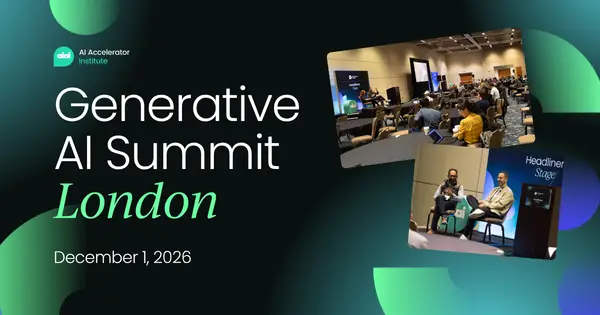
Where these questions get tested in person
The Chief AI Officer Summit Boston brings together around 250 directors, VPs, and C-level AI leaders at the Westin Boston Seaport on October 29, 2026, built around exactly these ten questions.
- Production benchmarks, pulled from enterprises already past the pilot stage.
- Vendor intelligence, on which agentic vendors are shipping versus dressing up automation with a new label.
- Governance frameworks, tested against real deployments rather than built from a blank page.


AI accelerator insider insider
Thank you for subscribing
Level up your ai accelerator insider career & network with ai accelerator insider experts.
An email has been successfully sent to confirm your subscription.
 Follow us on LinkedIn