

The gap between data-driven and data-lagging companies is defined by one thing: Pipeline architecture.
If you are still battling fragmented batch cycles, data swamp silos, and brittle monolithic code, you aren't just losing time - you’re losing your competitive edge.
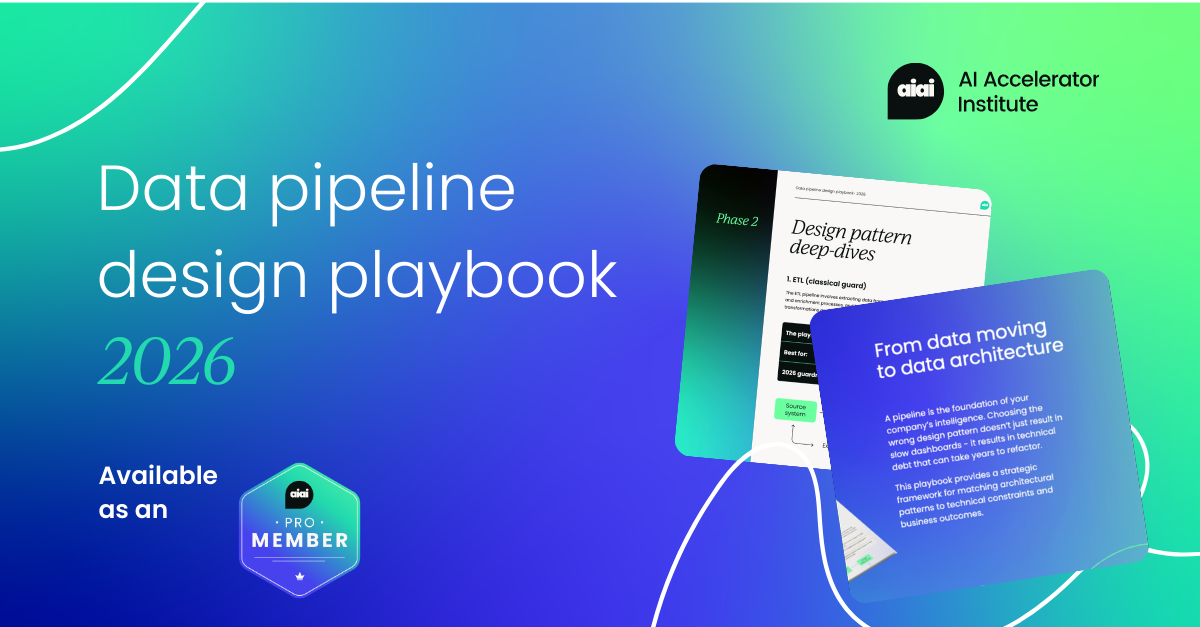
Our Data pipeline design playbook (2026 edition) is the definitive blueprint for modern data engineers.
Based on the industry-leading frameworks proven to handle the scale, speed, and complexity of today’s data demands, this guide moves you from reactive plumbing to proactive engineering.
Join 200+ applied AI professionals who are enjoying clean, validated data that stakeholders can actually trust.
What’s inside the playbook?
This isn't just theory. It’s a tactical guide to the 7 frameworks that are defining the 2026 data landscape:
- The kappa shift: Learn why treating everything as a stream is the secret to 100% data consistency.
- ELT vs. ETL: Why the transform-last approach is saving engineers 20+ hours of maintenance a week.
- Modern data lakes: Practical steps to implement "medallion architecture" and kill the data swamp for good.
- Microservices for data: How to build decoupled, unbreakable pipelines that scale horizontally.
- The lambda balance: When (and how) to combine batch and speed layers without doubling your workload.
Solve your biggest engineering headaches
About the framework
This playbook is built on the core principles of high-availability, low-latency, and cost-efficiency. Designed for practitioners, by practitioners, it translates complex architectural concepts into deployable strategies.
